
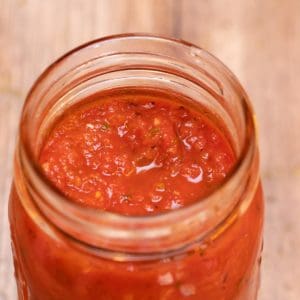
This Easy Homemade Marinara Sauce is fresh, flavorful, and made with just a handful of ingredients. Ready in about 35 minutes, it’s quick enough for a weeknight but delivers a rich, balanced tomato flavor that tastes as if it had simmered for hours.

This post contains referral links for products I recommend. As an Amazon Associate, I earn a small commission on qualified purchases, at no cost to you.
A Quick Look at the Recipe
✅ Recipe Name: Easy Homemade Marinara Sauce
⏲️ Ready In: 35 minutes
🥣 Main Ingredients: Canned Italian whole tomatoes, onion, garlic, olive oil, red wine, Italian seasoning
📖 Dietary Info: Vegetarian, gluten free
♨️ Method: Cooktop
🍽️ Yield: About 4 cups
⭐️ Difficulty: Easy
Summarize and save this content on:
I first created this marinara sauce on a snowy evening when I needed something warm and comforting and didn’t want to run to the store. Using canned Italian tomatoes, a splash of wine, and a few pantry staples, I was able to build a rich, balanced sauce in under an hour – one I now return to again and again!
Since then, it’s become one of my go-to sauce recipes for everything from Easy Chicken Parmesan to Turkey Stuffed Shells and even a cozy Hamburger Noodle Casserole. It’s simple, dependable, and one of those recipes that proves homemade can be just as easy as opening a jar – only much more flavorful.
Table of Contents
- A Quick Look at the Recipe
- Why You’ll Love This Easy Marinara Sauce
- What is Marinara Sauce?
- Ingredients
- Variations and Substitutions
- How to Make Homemade Marinara Sauce
- Success Tips
- How to Serve Marinara Sauce
- Storage, Make-Ahead, and Freezing
- Easy Homemade Marinara Sauce FAQs
- Easy Homemade Marinara Sauce Recipe
Why You’ll Love This Easy Marinara Sauce
- Rich, balanced flavor without long simmering. Good tomatoes and a splash of wine create depth that tastes like it cooked all day.
- Ready in about 35 minutes. Quick enough for a weeknight, with results far better than store-bought.
- Made with quality ingredients. Just a handful of pantry staples with no added sugar or unnecessary fillers.
- Perfect texture every time. Briefly pulsed for a slightly chunky, restaurant-style consistency.
- Versatile sauce. Delicious in pasta, baked casseroles, eggplant parmesan, and more.
- Make-ahead friendly. Keeps well in the refrigerator and can also be frozen.
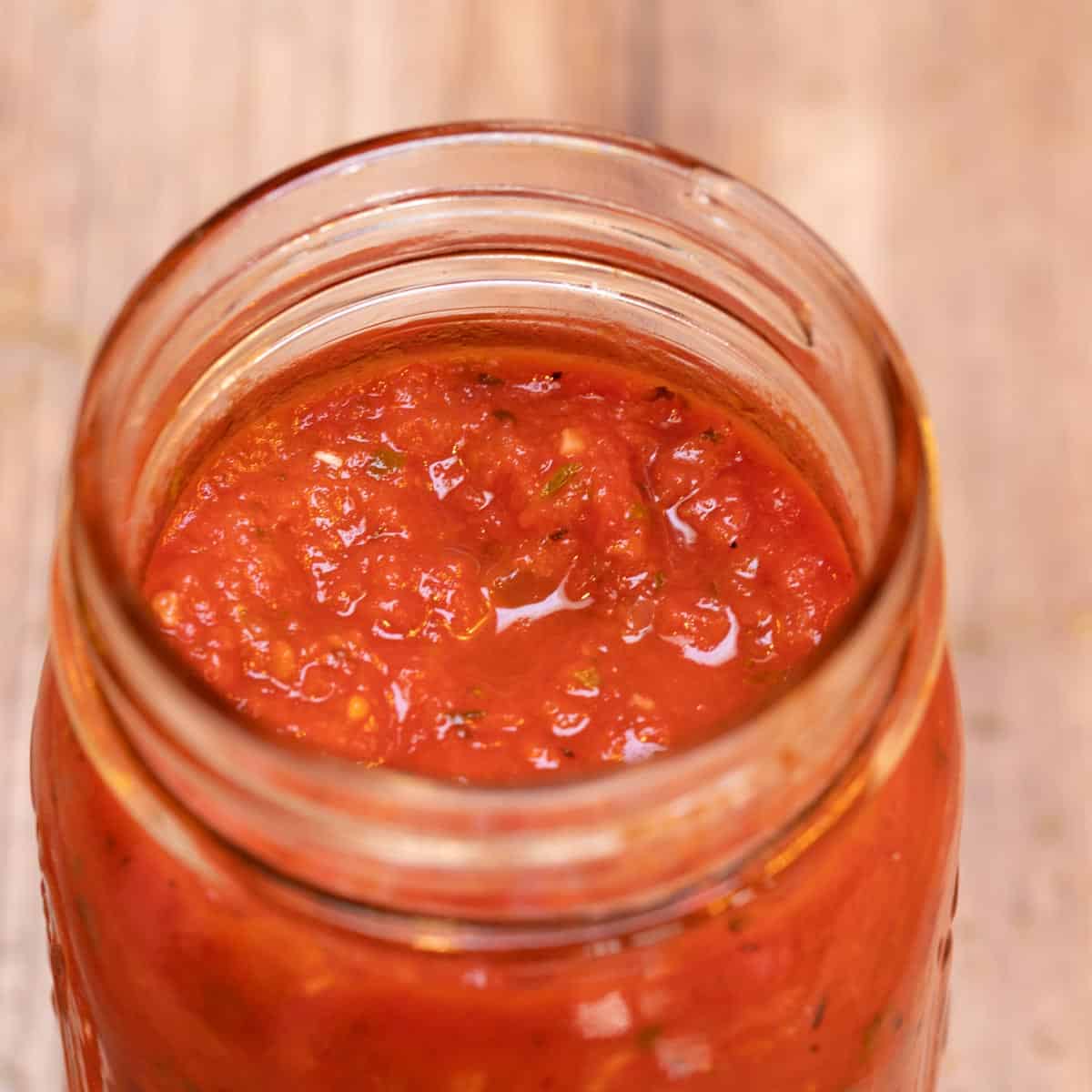
What is Marinara Sauce?
Marinara sauce is a traditional Italian tomato-based sauce made with onion, garlic, and herbs, and cooked relatively quickly. Unlike longer-simmered pasta sauces, it’s lighter and brighter, letting the flavor of the tomatoes really shine. Because it isn’t cooked for hours, using good tomatoes and a few well-chosen ingredients makes all the difference.
Ingredients
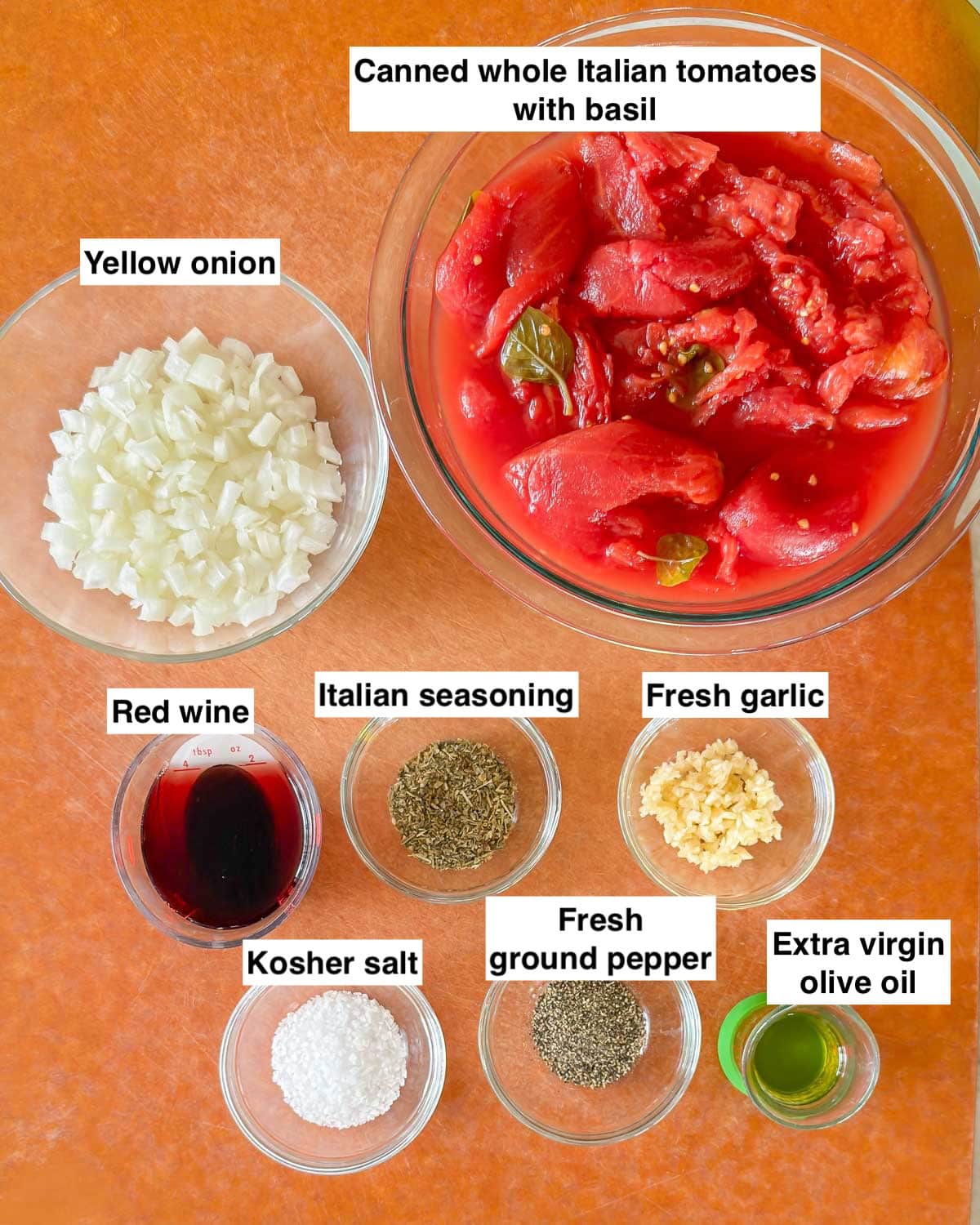
This easy marinara sauce recipe has just 8 ingredients – all available at your local grocery store. Here are some notes on a few:
- Italian whole tomatoes (preferably with basil): The most important ingredient in this sauce. High-quality Italian tomatoes are naturally sweeter and less acidic, with a meatier texture that creates a richer, more balanced sauce without long cooking. Many also contain fewer additives than standard canned tomatoes. Tomatoes packed with basil add an extra layer of flavor; if yours don’t include it, add 1-2 teaspoons chopped fresh basil (or 1/2 teaspoon dried).
- Red wine: Use a dry, medium-bodied wine such as Chianti, Merlot, or Cabernet Sauvignon. It adds depth and richness, giving the sauce a more developed, slow-simmered flavor. Avoid very light or overly acidic wines, which can make the sauce taste thin.
- Italian seasoning: A convenient blend of herbs – typically basil, oregano, rosemary, thyme, and marjoram – that adds balanced flavor. It’s an easy way to quickly build classic marinara flavor.
- Kosher salt: Essential for balancing the tomatoes’ acidity and bringing out their natural flavor. Season gradually and taste as you go.
Variations and Substitutions
- No wine: Substitute 2-3 tablespoons chicken or vegetable broth plus 1-2 teaspoons red wine vinegar for added depth.
- Different tomatoes: If you can’t find canned whole Italian tomatoes (best flavor), use canned crushed or diced Italian.
- Smoother sauce: Blend more thoroughly instead of pulsing.
- Add a little heat: Include a pinch of red pepper flakes when adding the tomatoes.
Quick Tip
If your marinara tastes too acidic, start by adding more salt, a pinch at a time, before adding any sugar. Salt doesn’t reduce the acid itself, but softens the sharpness of the tomatoes, making the sauce taste smoother and more flavorful. Taste again after seasoning. If it’s still too sharp and you don’t want to add more salt, then add a small pinch of sugar.
How to Make Homemade Marinara Sauce
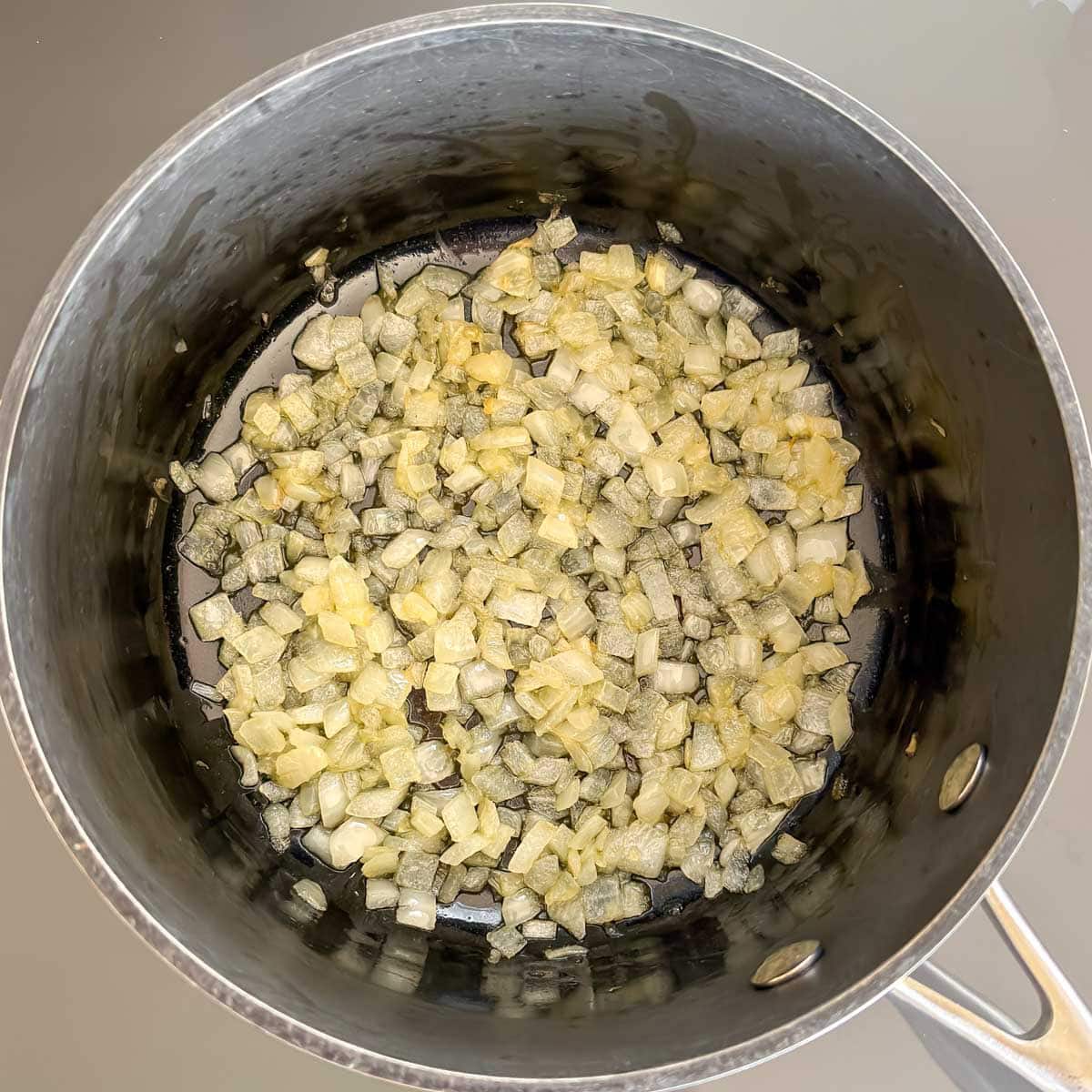
- Cook the onion. Heat olive oil in a medium saucepan over medium heat. Add onion, season very lightly with salt, and cook about 7-8 minutes, stirring occasionally, until soft and translucent.
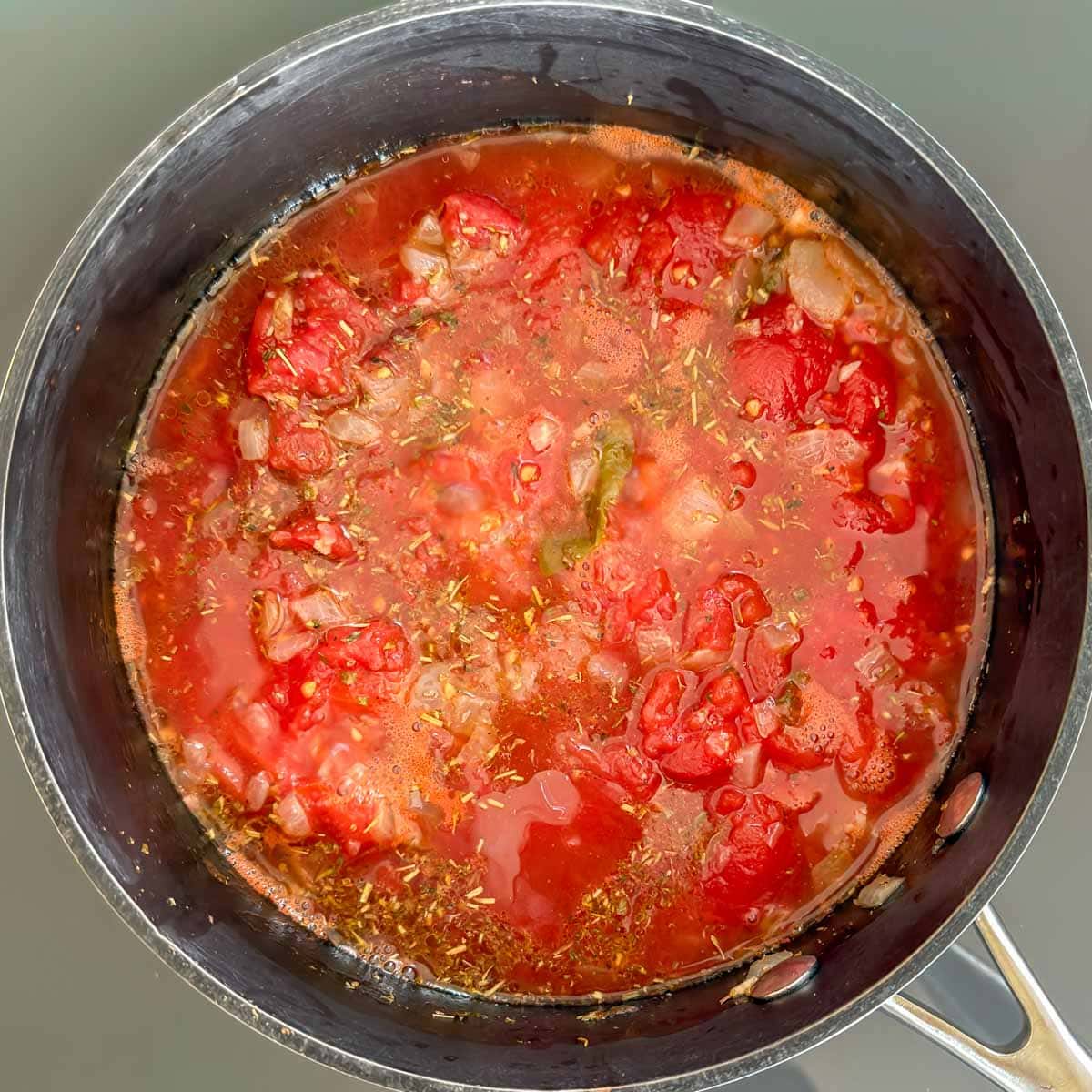
- Add remaining ingredients. Stir in garlic and cook just until fragrant, about 1 minute. Stir in tomatoes, red wine, and Italian seasoning, breaking up the tomatoes with a spoon. Season very lightly with salt.
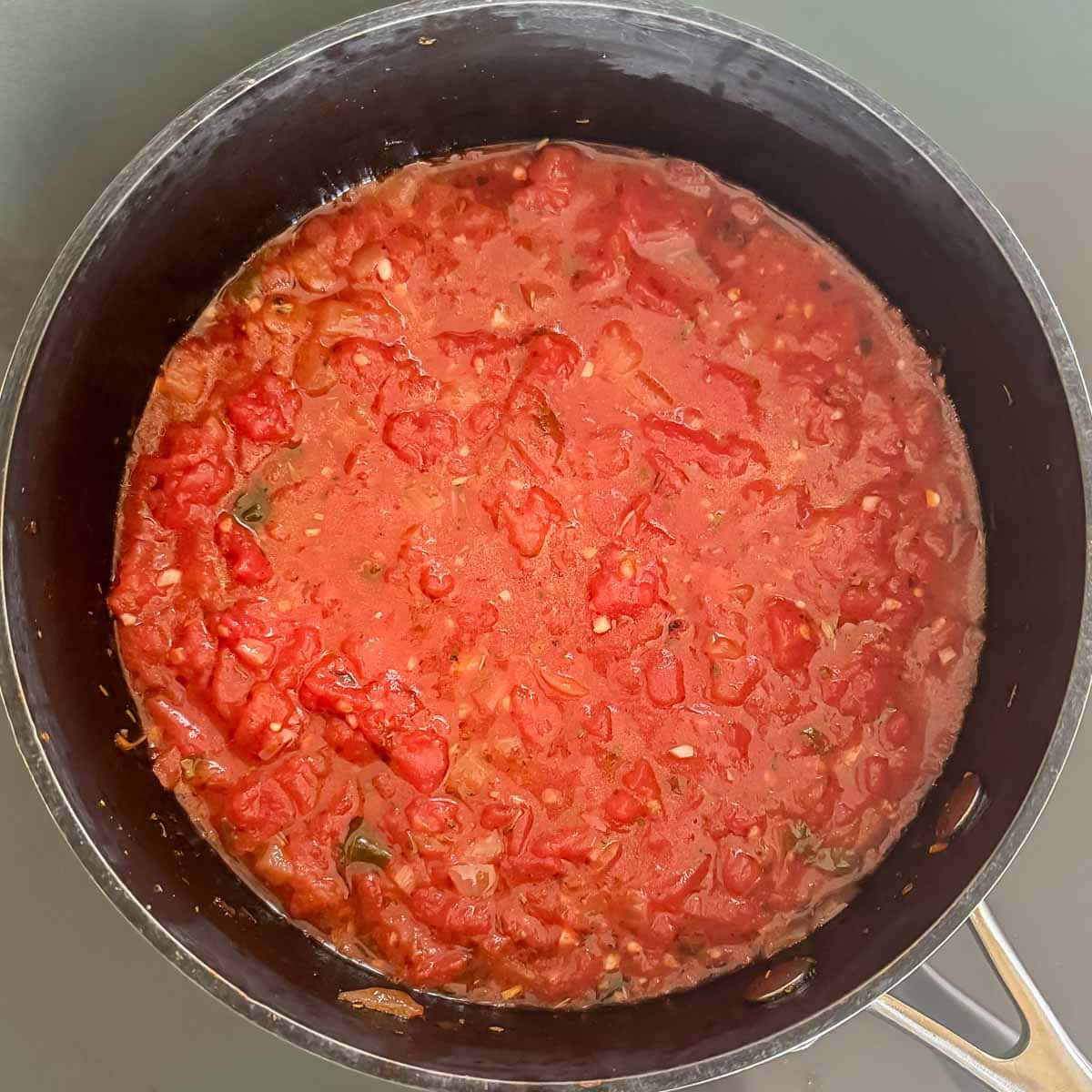
- Simmer. Bring to a low boil, then reduce the heat and simmer, uncovered, for 20 minutes, stirring occasionally; continue breaking up the tomatoes as you stir. It’s done when the tomatoes are very soft and the sauce has thickened slightly.
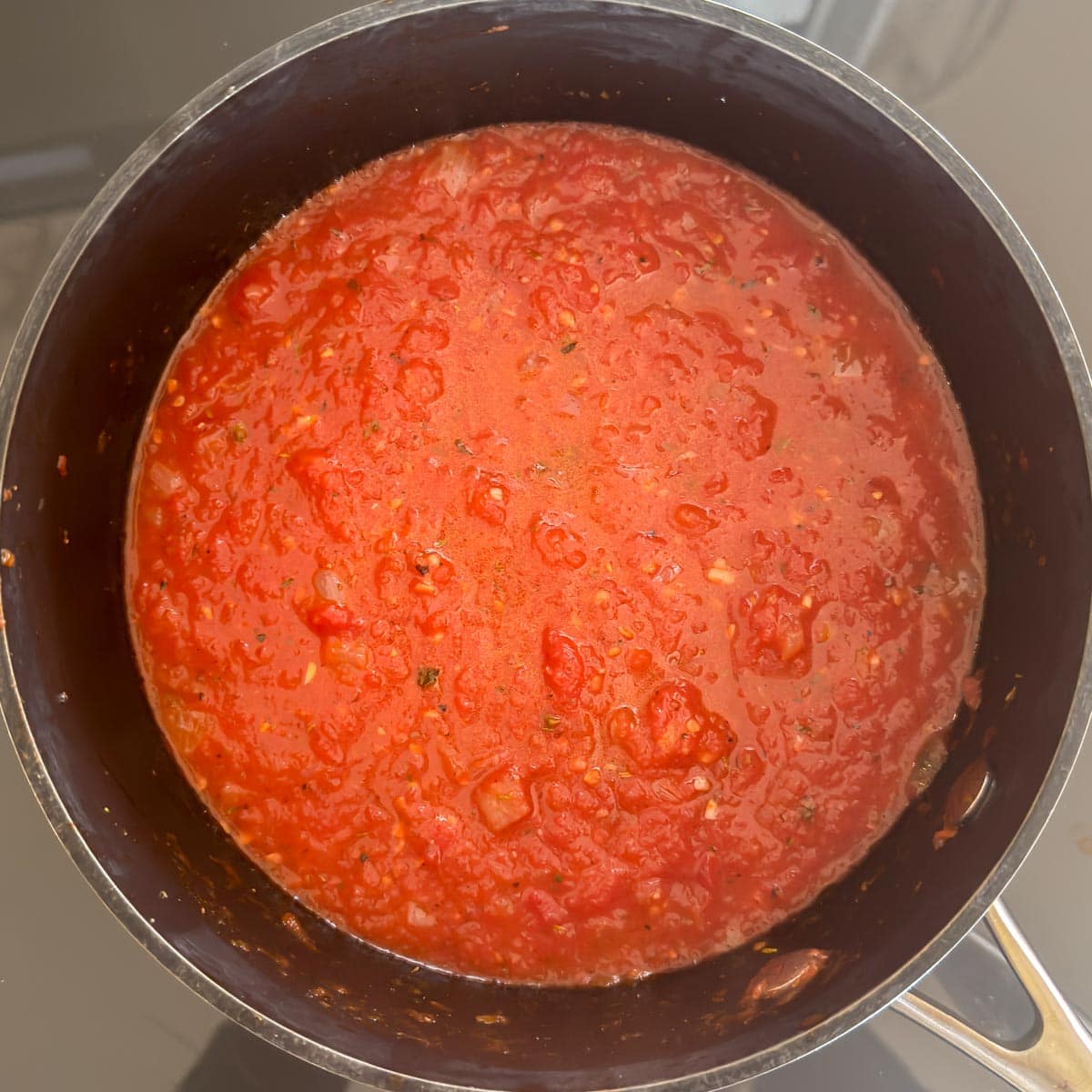
- Pulse. Remove from heat and let cool slightly. Using an immersion blender or a food processor, pulse the sauce 4 to 5 times until slightly chunky – don’t purée until smooth. Season to taste with salt and pepper, adding the salt gradually and tasting as you go.
Success Tips
- Use high-quality Italian tomatoes. They’re the foundation of this sauce. I like using 2 (18.7-ounce) jars of Masseria Mirogallo Pomodori Pelati whole tomatoes for a total of about 36 ounces. If using another brand of canned Italian tomatoes, which typically comes in a 28-ounce can and often doesn’t include basil, add 1-2 teaspoons chopped fresh basil (or 1/2 teaspoon dried) and reduce the amount of red wine to 3 tablespoons. The yield will be slightly less, closer to 3 cups.
- Pay attention to when you add salt. Season lightly with salt during cooking, then more generously at the end. Salt balances the tomatoes’ natural acidity and brings out their full flavor. Add gradually at the end, tasting as you go, until the sauce tastes rich and well-rounded.
- Don’t let the garlic brown. Cook just until fragrant. Browned garlic can turn bitter, affecting the entire sauce.
- Simmer gently, not rapidly. A low, steady simmer allows the flavors to develop without over-reducing or concentrating the acidity.
- Pulse, don’t purée. A few quick pulses create a slightly chunky, more flavorful sauce with better texture than a completely smooth purée.
How to Serve Marinara Sauce
This versatile marinara sauce works in everything from easy weeknight meals to more elegant entertaining.
- With pasta: Toss with your favorite pasta and top with freshly grated Parmesan cheese for a quick dinner.
- In baked dishes: Use in Turkey Stuffed Shells, Turkey Sausage Penne Marinara, or a cozy Hamburger Noodle Casserole.
- For classic Italian favorites: A must for Easy Chicken Parmesan and Homemade Eggplant Parmesan.
- As a base for eggs: Perfect for Eggs in Purgatory (Eggs Poached in Tomato Sauce).
- Over grains or vegetables: Delicious served over polenta or roasted vegetables for a lighter option.
Storage, Make-Ahead, and Freezing
- Storage: Store in an airtight container in the refrigerator.
- Make ahead: This sauce can be made up to 4 days in advance; the flavor often improves as it sits. Reheat gently before serving.
- Freeze: Let cool completely, then transfer to freezer-safe containers or zip-top freezer bags. Freeze for up to 2 months.
- Reheat: Thaw overnight in the refrigerator (if needed) and reheat on medium-low heat on the stovetop. The sauce may be slightly thinner after thawing; simmer briefly to bring it back to the desired consistency.
Easy Homemade Marinara Sauce FAQs
Yes. Substitute 2-3 tablespoons chicken or vegetable broth plus 1-2 teaspoons red wine vinegar. This keeps the flavor balanced.
Stored in an airtight container in the refrigerator, it will keep for up to 4 days. The flavor often improves as it sits. For longer storage, freeze for up to 2 months.
Tomatoes are naturally acidic, and that sharpness can come through in a quick-cooking sauce. First, add a bit more salt, which helps balance and round out the flavor. If needed, add a small pinch of sugar.
Yes. Whole, crushed, or diced tomatoes all work, though whole tomatoes typically provide the best flavor and texture. For the best results, use high-quality Italian tomatoes (sometimes labeled San Marzano). If your tomatoes don’t include basil, add a small amount for a more traditional marinara flavor.
More Easy Sauce Recipes
Did you make this recipe?
If you make this recipe, be sure to comment and give it a rating below. Don’t hesitate to ask questions – I’m happy to help!
Easy Homemade Marinara Sauce
Ingredients
- 2 tablespoons extra virgin olive oil
- 1/2 large yellow onion, chopped (around 3/4 cup)
- Kosher salt, to taste
- 3 cloves garlic, chopped or pressed
- 36 ounces Italian tomatoes with basil, jarred, undrained – see Note below
- 5 tablespoons red wine
- 1 1/2 teaspoons Dried Italian seasoning
- Fresh ground pepper, to taste
Instructions
- Heat olive oil in a medium saucepan over medium heat. Add onion, season very lightly with salt, and cook about 7-8 minutes, stirring occasionally, until soft and translucent.
- Stir in garlic and cook just until fragrant, about 1 minute.
- Stir in tomatoes, red wine, and Italian seasoning, breaking up the tomatoes with a spoon. Season very lightly with salt, bring to a low boil, then reduce the heat and simmer for 20 minutes, uncovered, stirring occasionally; continue breaking up the tomatoes as you stir. The sauce is done when the tomatoes are very soft and slightly thickened.
- Remove from heat and let cool slightly. Using an immersion blender or food processor, pulse the sauce 4 to 5 times until slightly chunky – don’t purée.
- Season to taste with salt and pepper, adding the salt gradually and tasting as you go.
Notes
- Use high-quality Italian tomatoes. They’re the foundation of this sauce. I like using 2 (18.7-ounce) jars of Masseria Mirogallo Pomodori Pelati whole tomatoes for a total of about 36 ounces. If using another brand of canned Italian tomatoes, which typically comes in a 28-ounce can and often doesn’t include basil, add 1 to 2 teaspoons chopped fresh basil (or 1/2 teaspoon dried) and reduce the amount of red wine to 3 tablespoons. The yield will be slightly less, around 2 3/4 cups.
- Pay attention to when you add salt. Season lightly with salt during cooking, then more generously at the end. Salt balances the tomatoes’ natural acidity and brings out their full flavor. Add gradually at the end, tasting as you go, until the sauce tastes rich and well-rounded.
- Don’t let the garlic brown. Cook just until fragrant. Browned garlic can turn bitter, affecting the entire sauce.
- Simmer gently, not rapidly. A low, steady simmer allows the flavors to develop without over-reducing or concentrating the acidity.
- Pulse, don’t purée. A few quick pulses create a slightly chunky, more flavorful sauce with better texture than a completely smooth purée.
Nutrition
Nutrition information is automatically calculated, so should only be used as an approximation.






Hi Lee – I went to Marczyk’s on Colfax and the only tomatoes they had were canned Carmelina San Marzano. I am making the sauce right now and these tomatoes seem to be just fine. Wonderful aromas!
Hope all is well!
Ginger
Those tomatoes sound perfect!
I know you said it takes a fair amount of salt. I am on salt restriction can I make it without the salt. Are usually make my tomato sauce without salt. Love your recipes.
Leslie – yes you can make it without salt. If it’s too tangy, add a pinch or two of sugar. Glad you are enjoying my recipes!
Lee