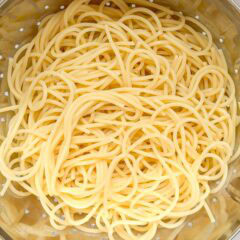
In my cooking classes, one of the most common questions I get is how to cook pasta so it’s tender but not gummy or mushy, and always flavorful. The good news is that perfect pasta comes down to a few key techniques: enough water, enough salt, the right timing, and knowing when to drain, rinse, or save a little pasta water.

Once you’ve mastered these basics, you can use them in everything from quick weeknight dinners to more elegant dishes. Try them with my Easy Marinara Sauce, Make Ahead Chicken Parmesan, or Pappardelle with Mushrooms and Eggplant – or find even more ideas in my Pasta Recipes collection.
A Quick Look at How to Cook Perfect Pasta
✅ Best Ratio: 6 quarts water per pound of pasta
🧂 Salt: 2 tablespoons kosher salt per pound of pasta, added once water is boiling
⏱️ Timing: Start tasting 2 minutes before package directions
🍝 Texture: Cook until al dente (tender with a slight bite)
🥄 Stirring: Stir immediately after adding pasta
, then 1-2 more times
🚫 Do Not Add: Oil to the water
💧Key Tip: Reserve some pasta water before draining, if serving with a sauce
❓Rinse: Only for certain cold or make-ahead uses (see below)
Summarize and save this content on:
Pasta has always been a favorite in our house, especially since my husband, Robert, is half-Italian. I love how easy it is to pull together a quick weeknight meal with pantry ingredients, like my Cajun Shrimp Linguine. At the same time, pasta can be dressed up beautifully for effortless entertaining, such as a Farfalle Bolognese Pasta Casserole. Whether it is an easy stove-top dish or a festive baked casserole, the key to success is mastering the basics.
Table of Contents
How Much Water and Salt to Use (The “Golden Ratio” for Perfect Pasta)
I’ve always followed the advice of the legendary Marcella Hazan, who believed pasta needs room to “breathe.” I first heard her share this idea at the Aspen Food & Wine Classic in the ’90s, and it’s a principle I’ve followed ever since. To ensure every strand is perfectly cooked and seasoned, follow her time-tested requirements:
- The Water: 6 quarts of water per 1 pound of pasta.
- The Salt: 2 tablespoons of Kosher salt per 1 pound of pasta.
- The Space: Use a large stockpot so the pasta can “dance” and circulate.
Use the table below to find the exact water, salt, and pot size requirements based on your specific number of servings.
| Servings | Pasta | Water | Kosher Salt | Pot Size |
|---|---|---|---|---|
| 1 | 2 oz | 1 quart | 1 tsp | 2 quart |
| 2 | 4 oz | 2 quarts | 2 tsp | 3 quart |
| 4 | 8 oz (1/2 lb) | 3-4 quarts | 1 Tbsp | 5 quart |
| 8 | 16 oz (1 lb) | 5-6 quarts | 1 Tbsp | 8 quart |
Salt Note: Measurements are based on kosher salt. If using fine sea or table salt, reduce the amount by about one-third to one-half.
High-Altitude Note: If you are cooking at a higher altitude (like I am here in Colorado), a large volume of water is even more critical. Because water boils at a lower temperature in thin air, a large pot helps maintain a consistent, vigorous boil when the pasta is added. In addition, keep in mind that your pasta will likely need an extra 1–2 minutes of cook time.
How to Cook Perfect Pasta (Step-by-Step)
Time needed: 12 minutes
The best way to cook pasta is to use plenty of well-salted water, cook it until al dente, and follow a few key steps:
- Select a large pot.
Use a large pot so it can hold enough water to give the pasta room to move freely without boiling over. An 8-quart stockpot works best for a full pound; use a smaller pot for smaller amounts (see table above).
- Bring cold water to a full, rolling boil before adding pasta.
Fill the pot with the recommended amount of cold water and bring it to a full, rolling boil before adding anything.
- Salt the water once it’s boiling.
Add kosher salt so the pasta is seasoned from the inside out while it cooks.
- Add the pasta and stir immediately.
Stirring right away helps prevent the pasta from sticking together or to the bottom of the pot.
- Cook uncovered, stirring occasionally.
Let the pasta cook at a steady boil, stirring once or twice more as it cooks to ensure even heat distribution and prevent sticking.
- Start tasting early.
Begin checking about 2 minutes before the package directions. The pasta is done when it’s tender with a slight bite (al dente).
- Reserve some pasta water.
If you are using a sauce, scoop out a little of the starchy cooking water before draining. This “liquid gold” helps loosen and bind your sauce to the noodles.
- Drain promptly.
Drain the pasta as soon as it’s done.
- Rinse only if needed.
Do not rinse when serving with sauce, as the starch helps the sauce adhere. Rinse briefly only for certain cold or make-ahead uses (see below).
These steps work whether you’re making a quick weeknight pasta, a baked dish like my Stuffed Shells, or one of my Pasta Salad Recipes for entertaining.
Seasoned Tip
Always fill your pot with cold water, not hot. Hot water can carry sediment or a “flat” taste from your home’s water heater. Starting with fresh, cold water ensures the cleanest possible flavor for your pasta.
Should You Rinse Pasta?
In most cases, the answer is no, you should not rinse pasta after cooking. The natural starch on the surface is essential – it helps your sauce cling to the noodles, creating a better texture and a more flavorful dish.
However, there are a few exceptions where a quick rinse can be helpful.
When to rinse pasta
- For pasta salad: Rinsing cools the pasta quickly and stops the cooking process before tossing with dressing and other ingredients, especially in recipes like my [specific pasta salad].
- For certain make-ahead uses: A quick rinse can reduce sticking if the pasta won’t be used right away.
- To stop cooking immediately: If the pasta is done but the rest of the dish isn’t ready.
When not to rinse pasta
- When serving with sauce: The starch helps the sauce adhere.
- For baked pasta dishes: Rinsing can make the pasta less able to absorb sauce.
Common Pasta Problems (and How to Avoid Them)
Here are the most common problems when cooking pasta, what causes them, and how to avoid them:
‣ Pasta sticks together and cooks unevenly
What happened: Not enough water or the pasta wasn’t stirred right away.
Solution: Use plenty of water so the pasta can move freely (see table above), and stir immediately after adding.
‣ Pasta tastes bland
What happened: The water wasn’t salted enough.
Solution: Add 1 to 2 tablespoons of kosher salt once the water is boiling.
‣ Sauce won’t cling to the pasta
What happened: Oil was added to the water or the pasta was rinsed.
Solution: Skip the oil and don’t rinse when serving with sauce.
‣ Pasta is mushy
What happened: It was overcooked or not drained promptly.
Solution: Start tasting about 2 minutes before the package directions and drain as soon as it’s tender with a slight bite
.
‣ Pasta clumps together after draining
What happened: It sat too long without sauce or wasn’t stirred.
Solution: Toss with sauce right away, or add a small amount of reserved pasta water and stir.
‣ Pasta continues cooking after draining
What happened: It wasn’t drained quickly enough or left in hot water.
Solution: Drain immediately once done and avoid letting it sit in the pot.
‣ Sauce is too thick or doesn’t coat the pasta well
What happened: No pasta water was reserved.
Solution: Scoop out a little of the cooking water before draining, then use it to loosen and bind the sauce.
Frequently Asked Questions About Cooking Pasta
Yes. Cook the pasta just shy of al dente, drain, and spread it out on a parchment-lined sheet pan to cool so it doesn’t stick together. Once cooled, transfer to an airtight container and refrigerate. When ready to use, reheat briefly in simmering water or add directly to a hot sauce to finish cooking.
The best approach is to toss it with the sauce right away. If it needs to sit briefly, add a small amount of reserved pasta water and stir occasionally to keep it loose.
No. Once the pasta is added, cook it uncovered. Covering the pot can cause the water to boil over, and doesn’t improve how the pasta cooks.
Cook it just under al dente, since it will continue cooking in the oven. For dishes like stuffed shells or lasagna, spread the pasta out after draining so it doesn’t stick together, and let it cool and dry slightly. For shells, I like to place them upside down so they drain well — it also helps prevent the filling from becoming watery.
A good rule of thumb is 2 ounces of dried pasta per person for a main dish. Adjust based on appetites and whether you’re serving multiple courses.
Recipes to Try with Perfect Pasta
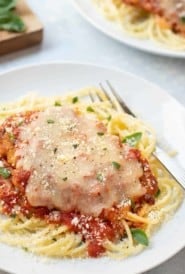

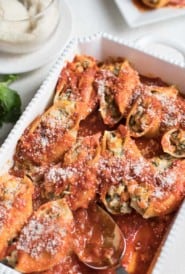

Now that you know how to cook perfect pasta, explore more ideas in my Pasta Recipes collection, including easy weeknight dinners, make-ahead dishes, and pasta salads for entertaining.